Thursday, June 14, 2012

Pacquiao wasn’t robbed; he was ‘punished’ under law of supply and demand


Pacquiao wasn’t robbed; he was ‘punished’
under law of supply and demand


By Alex P. Vidal

LOS ANGELES, California – When Manny Pacquiao was “about to fail” to produce a knockout victory after five straight fights the night of June 9 at the MGM Grand in Las Vegas, Nevada, his goose was cooked.
After his failure to deck Joshua Clottey, Antonio Margarito, Shane Mosley, and Juan Manuel Marquez, boxing – Las Vegas boxing to be precise – was on death throes. (He fought both Clottey and Margarito in Arlington, Texas).
Four straight boring decision wins for the man who rescued professional boxing from doldrums in absence of exciting heavyweight bouts that used to dominate prizefighting in the 60s, 70’s, 80’s, and early 90’s was not good for business.
A fifth straight decision win for the most celebrated boxer in the planet today would be fatal for the sport that has amassed billions of revenues since Las Vegas captured worldwide audience in sports and entertainment on October 2, 1980 when Larry Holmes blasted to smithereens Muhammad Ali via 10th round TKO to annex the WBC heavyweight title.
For financiers to continue hitting pay dirt and luring rich sponsors, boxing needed a spectacular knockout show from the best boxer pound-for-pound to satisfy paying bloodthirsty fans and to keep boxing’s cash registry machine ringing.
In Las Vegas – or in any part of the United States in as far as boxing is concerned – Manny Pacquiao is business; business is Manny Pacquiao. The congressman from Mindanao is boxing’s multi-billion guy and number one endorser. He is boxing’s life-support system. Each lackluster performance means a decline in pay-per-view and gate receipts in the next promotion.

RESPONSIBILITY

On Pacquiao’s shoulders rest the titanic responsibility to fill the vacuum left behind by Holmes, Ali, George Foreman, Riddick Bowe, Andrew Golota, Evander Holyfield, Ray Mercer, Vitaly Klitschko, and Mike Tyson. Boxing skidded into all-time low when explosive heavyweight duels virtually closed shop in the later part of 1990’s. Enter Pacquiao, a mighty atom who packs wallop in both fists.
Although his baptism of fire in Las Vegas occurred on June 23, 2001 when he poleaxed Lehlono Ledwaba of South Africa in the sixth round to clinch the IBF super-bantamweight crown as a relative unknown in the US market, empty seats in major venues such as Thomas & Mack Center, Mandalay Bay Resort and Casino, began to disappear when Pacquiao humiliated Erik “El Terible” Morales via 10th round TKO on January 21, 2006 at the Thomas & Mack Center to avenge a 12-round unanimous decision loss  to the Mexican on March 19, 2005 at the MGM Grand.
The revenge to Morales romped off Pacquiao’s love affair with Las Vegas where he obtained a perfect 10-0 win-loss (6 KO’s) juggernaut in world title showdowns. In those victories, he became one of the riches paid athletes in the world amassing nearly a whopping $60 million in purses and shares in pay-per-view, according to Forbes Magazine

VICTORY

Pacquiao’s last stoppage victory came on November 14, 2009 when he grabbed Miguel Angel Cotto’s WBO welterweight title on a brutal 11th round TKO at the MGM Grand.
Since then, he logged decision victories against Clottey (12-round WBO welterweight title), Margarito (12-round WBC light-middleweight title), Mosley (WBO welterweight title), and Marquez (WBO welterweight title).
Hounded by calls for his retirement owing to a mothballed fight against Floyd Mayweather Jr. and alarming decline of his knockout percentage, Pacquiao was obliged to put to sleep Timothy Ray Bradley Jr. in their 12-round battle for the WBO 147-lb jewels to preserve the chain of command prior to a possible fisticuff against Mayweather Jr. and to protect his market value as boxing’s only 8-division champion in history. Most of all, to ignite sparks in fight business in danger of being walloped by recession.
If he couldn’t put up a spectacular performance against Bradley – a knockout in his 60th professional fight – a changing of the guard was imminent.  No one has the monopoly to bankroll millions of dollars without putting up a hair-splitting show.

‘GOOD GUY’

Since Bradley’s “a good guy,” according to Top Rank boss Bob Arum during the post-fight press conference, “it’s okay” (if Pacquiao’s WBO welterweight belt changed waist).
Young and eager to prove his win against Pacquiao wasn’t a fluke, Bradley will now aim to give the sport a new lease in life by knocking out all his next challengers if he hurdles Pacquiao in their November 2 rematch.
For Arum, et al, when one door closes, another door will open. Arum’s love for Bradley is not a secret. Immediately after Michael Buffer announced the split decision verdict, Arum didn’t hide his excitement as he congratulated the newly crowned champion like a father shaking the hand of a graduating son accepting awards on stage.
Pacquiao, who vowed to deny the judges the chance to decide the outcome of his rematch with Bradley, may not have realized that the judges who scored a split decision for Bradley after he failed to send the unbeaten American to dreamland, did not rob him of his WBO title. The “punishment” was necessary under law of supply and demand.

Tuesday, June 12, 2012

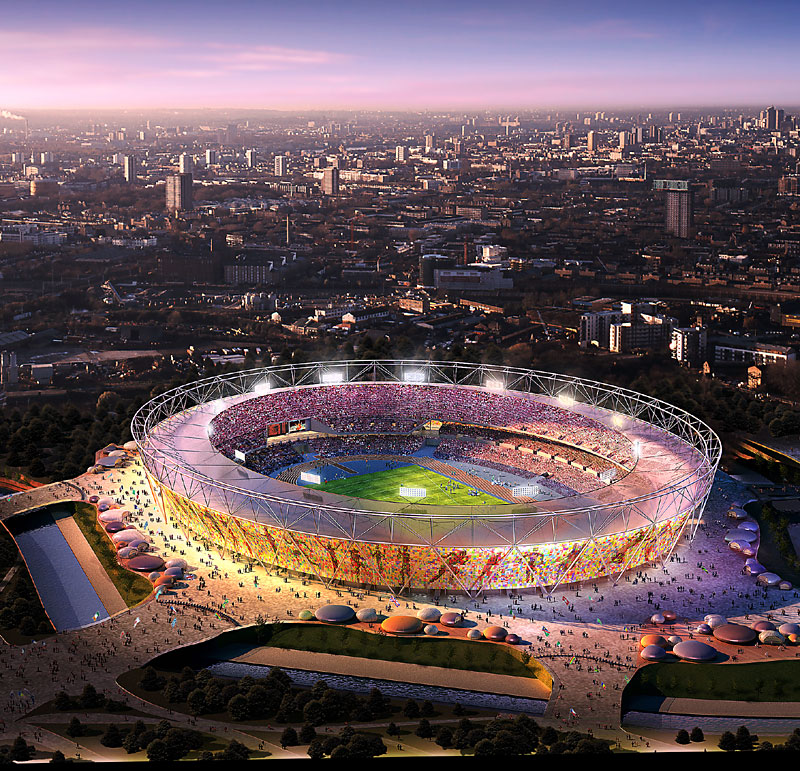
No to cancellation of London Olympic Games


No to cancellation of 2012
London Olympic Games


By Alex P. Vidal

LOS ANGELES, California -- The proposed cancellation of the 2012 London Olympic Games on July 27 to August 12, is being met with derision and suspicion from different sectors even as worries about possible terrorist attack mount.
Cancellation proponents fear that the presence of battleships, snipers, surveillance drones, SAM sites and MI5 crawling all over the city as part of security measure will scare tourists and spectators not to mention possible delays to be incurred by those flying to and from the Heathrow International Airport and those going to competition venues from their hotels.
Jamie Dunkley, financial services correspondent at the Daily Telegraph, Sunday Telegraph and telegraph.co.uk who writes about insurance, asset managers, banks and other issues relating to the world of business, had warned that cancelling the Summer Games would cost $5 billion.

REVENUES

“The bill would cover the costs incurred and revenues lost by companies such as advertisers and media companies, according to reinsurer Munich Re. Other forms of cover, including employers and public liability insurance, would add to the industry's losses,” wrote Dunkley. “However, policies will not cover cancellation or disruption caused by transport chaos in London.”
Dunkley explained that Andrew Duxbury, London underwriting manager at Munich Re, which has an exposure of about £280 million to the games, has said: "The revenue exposures between the World Cup in Africa and the London Olympics are similar, so I would expect the overall cancellation exposure to be a similar amount – about $5 billion."
The International Olympic Committee receives billions of dollars in television rights, meaning any disruption would prove extremely costly. "TV companies across the world have committed huge resources to ensure they are able to show the opening and closing ceremonies and broadcast Usain Bolt defending his 100m title," Dunkley quoted Mr Duxbury.


CHALLENGES

Hosting the Olympics in London will bring different challenges to those posed in China four years ago. "In Beijing, natural catastrophe risks such as earthquakes concentrated insurers' minds," he said. "In London, flash flooding from summer storms could cause temporary disruption. However, issues such as terrorism are potentially much more serious.
"One thing that won't trigger most cancellation policies is general travel dislocation. If 10,000 people fail to get to the stadium on time because they are stuck on the Jubilee Line then that will likely not be covered. The onus is upon everybody to build in extra journey time and hope that London's public transport network can take the strain."

FAME AND SHAME OF OLYMPIC GAMES


By Alex P. Vidal

LOS ANGELES, California -- Life must go on for all of us after the Pacquiao-Bradley debacle. After all, the tumult did not bring us all down; it even united us -- against the diabolical backdoor operators in particular, and ruthlessness of the sport, otherwise known as the "Sweet Science," in general.
Highly regarded for producing immortal human beings in the persons of Gene Tunney, Pancho Villa, Sugar Ray Robinson, Muhammad Ali, Joe Louis, Flash Elorde, George Foreman, and, yes, Manny Pacquiao, boxing is now a forbidden name in the pedestal of sports integrity as a result of the June 9  heist at the MGM Grand in Las Vegas, Nevada.
Controversies don’t happen exclusively in the glitzy gambling capital of the world. The Olympic Games has its own share of both fame and shame. And since it is an Olympic season, let's pave the way for Bill Shaikin's Top 10 Olympic controversies that have left indelible stains in the Summer Games.

GLORY, ACCLAIM

The Olympic Games offer competitors the chance to bathe in national glory and international acclaim. The victors — indeed, all the athletes who aspire to victory — are celebrated in the Olympic motto of "Citius, Altius, Fortius." Faster, higher, stronger.
Yet celebration and aspiration sometimes share the Olympic spotlight with controversy, with scandal and with athletes who train and compete outside the bounds of Citius, Altius and Fortius. One ranking of the 10 least pure moments in the history of the Summer Games:
No. 10 (1912): Jim Thorpe never had participated in a decathlon until the 1912 Olympics. He won the pentathlon, then gave the decathlon a try and won gold there too. He was saluted as the greatest athlete in the world, rewarded with a ticker-tape parade in New York and generally revered until the Worcester (Mass.) Telegram reported a few months later that Thorpe had made a few bucks playing minor league baseball — $25 or $35 a week, in the summers of 1909 and 1910. That made him a professional athlete, in the eyes of U.S. Olympic officials, and the International Olympic Committee stripped him of his medals. However, decathlon runner-up Hugo Wieslander of Sweden said he considered Thorpe the fair champion and would not accept the gold medal. The IOC reinstated Thorpe posthumously and awarded his children duplicate gold medals in 1983.
No. 9 (1984): At a time South Africa was banned from the Olympics because of its state-sponsored racial segregation, a South African teenager named Zola Budd ran for Britain, after London's Daily Mail paid for her to move to England four months before the Games. She had a British grandfather, it turned out, and soon enough she had British citizenship. In the final of the women's 3,000 meters, she and American favorite Mary Decker bumped, with Decker tripping on Budd's right leg and falling to the ground with a hip injury. She did not finish. Budd, loudly booed at the Los Angeles Coliseum, finished seventh. Budd apologized to Decker, who told her, "Don't bother. I don't want to talk to you." Decker faulted Budd for improperly cutting inside; track officials briefly disqualified her and then reinstated her. Budd had grown up with a poster of Decker on her wall.

FINISH LINE

No. 8 (1904): On a sweltering afternoon in St. Louis, Fred Lorz of the U.S. crossed the marathon finish line with no other runners in sight. The day was so hot and the course so poor — the only water available came from a well 12 miles into the race — that 18 of the 32 runners to start the race did not complete it. As it turned out, neither did Lorz. He tired after about nine miles, then jumped into a car for the next 11. The car broke down, so Lorz ran the rest of the way, and he was greeted as the winner. The fraud was quickly discovered, and Lorz confessed to what he said was a practical joke. He did win the Boston Marathon in 1905.
No. 7 (1936): Perhaps the most enduring myth of the Olympic Games is that Adolf Hitler refused to extend a congratulatory handshake to Jesse Owens, a claim for which Olympic historians have found no supporting evidence. It is clear that Hitler was neither pleased nor impressed by the four gold medals Owens won, even as the German crowd cheered him loudly and mobbed him for pictures and autographs. As Owens pierced the Nazi myth of Aryan superiority, his home country acted with regrettable caution, replacing two Jewish sprinters on the U.S. team. Owens got a hero's welcome upon returning home, yet as a black man he had to ride the freight elevator to a New York hotel reception in his honor. Once the Olympic glow faded, Owens had to earn money by racing against horses.
No. 6 (1968): In the months following the assassinations of Martin Luther King Jr. and Robert F. Kennedy, black American athletes debated whether to protest strained race relations by boycotting the Olympics. Instead, Tommie Smith and John Carlos offered a silent protest from the medal stand. Smith won gold in the men's 200 meters, Carlos won bronze. As the national anthem played, Smith and Carlos bowed their heads and raised a black-gloved fist toward the sky. The silver medalist, Australia's Peter Norman, volunteered to wear a sticker supporting the Olympic Project for Human Rights. The International Olympic Committee threatened to expel the U.S. team if Smith and Carlos were not sent home at once. Smith and Carlos both attended San Jose State, which erected a statue in their honor in 2005. When Norman died the next year, Smith and Carlos each served as pallbearers at the funeral.

BLOWS

No. 5 (1988): Roy Jones Jr. of the United States dominated the three-round light-middleweight championship fight. That he would win was a foregone conclusion. He landed 86 blows; opponent Park Si-hun of South Korea landed 32. These Games were in Seoul, and one judge told Sports Illustrated he "voted for the Korean" so the boxers from the host country would not be shut out. But two of the other four judges favored Park as well, giving him the gold medal in a decision that triggered this commentary in the French newspaper L'Equipe: "Scandalous.To vomit." Park reportedly admitted he had lost the fight, but he did not return the medal. The decision stood — yet Jones was selected as the most outstanding boxer of the Olympics.
No. 4 (1956): As the Hungarian water polo team left for Melbourne to defend its gold medal, Hungary withdrew from the Warsaw Pact and declared itself a free and independent country. By the time the team arrived at the Olympics three weeks later, the Soviet Union had invaded Hungary and crushed the rebellion. The Hungarians played on, and drew the Soviets in the water polo semifinals. "We were yelling at them, 'You dirty bastards. You come over and bomb our country,'" Hungarian star Ervin Zador told the BBC. "They were calling us traitors." Hungary led 4-0 when a Soviet player pummeled Zador so severely that blood streamed from above his eye. The match was stopped, with pro-Hungarian fans threatening to storm the playing area and fight with the Soviet team. Zador's injury forced him to sit out the gold-medal game, which Hungary won, but the semifinal has been immortalized as the "Blood in the Water" game.

SWORD

No. 3 (1976): The light went on whenever the sword made contact with the opponent. Get a hit, trigger the light. That was fencing. But how could the light go off when there was no hit? That was what Britain's modern pentathlon team wanted to know when two of its competitors complained that Boris Onischenko of the Soviet Union was getting credit for mythical hits. An examination of Onischenko's sword revealed he could push a concealed button and trigger the light whenever he wanted. He was disqualified, and the nickname wrote itself in headlines around the world: "Disonischenko."
No. 2 (1988): "I'd like to say my name is Benjamin Sinclair Johnson Jr. and this world record will last 50 years, maybe 100." That is how Canada's Ben Johnson opened the news conference after winning gold in the men's 100 meters in Beijing, obliterating the previous record with a time of 9.79 seconds. He was stripped of the gold medal three days later, after testing positive for steroids, the biggest name to be caught in Olympic drug testing. Carl Lewis of the U.S. was declared the winner, with a runner-up 9.92 that set an Olympic record. It was not until 1999 that Maurice Greene ran the first legitimate 9.79. Jamaica's Usain Bolt holds the current world record of 9.58.
No. 1 (1972): The United States never had lost a men's basketball game in the Olympics, and three seconds were all that stood between the U.S. and another gold medal. The Americans led, 50-49. The Soviet Union inbounded the ball, and time ran out. But a British official from the international basketball federation — in the stands, not on the court — ordered three seconds restored, ostensibly the time left when the Soviets tried to call time out. Again the clock ran out, and again three seconds were ordered restored, this time because the clock allegedly had not been properly reset. Alexander Belov converted a long pass into the winning basket, the Americans' record in the Olympics fell to 63-1 and the U.S. team refused to accept its silver medals. The medals remain locked in a Swiss vault.
Sources for Shaikin's report included the Guardian's "50 Stunning Olympic Moments" and David Wallechinsky's "The Complete Book of the Olympics."

Monday, June 11, 2012

Uncle Bob should be investigated, too


Uncle Bob should be investigated, too


By Alex P. Vidal

LOS ANGELES, California – I was seated on the second row facing Bob Arum during the post-fight press conference June 9 night at the Media Center in MGM Grand in Las Vegas when the Jewish-American promoter exhorted the press to challenge Keith Kizer, executive director of the Nevada Athletic Commission, to bring all the three judges in the presidential table and let them explain their scorecards.
“Where’s somebody from the commission? Why don’t they come up (here) and explain their decision?” the 79-year-old Arum yelled.
The three judges -- Duane Ford, CJ Ross, and Jerry Roth -- have been selected by a panel of five Nevada Athletic Commission commissioners, Arum explained.
“It was ridiculous,” Arum thundered. “That’s the only word to describe it.”
He volunteered to pay for the air fare of the judges “to see my eye doctor in Los Angeles.”
Arum said, “The outcry worldwide about the decision will not be good for the sport of boxing.” But he agreed that newly crowned WBO welterweight boss Timothy Ray Bradley Jr. “should be congratulated because the title went to a good guy.”

‘ALL HONEST’

The CEO of Top Rank, promoter of the WBO welterweight championship bout between dethroned champion Manny Pacquiao and Bradley Jr., however, described the three judges as “all honest.”
“I know them personally and these guys are honest,” he declared.
The rematch clause did not influence the judges’ scorecards, he swore, saying it could only be valid in the event of a Bradley victory.  
But we beg to disagree that “the judges most likely had no idea that a rematch clause was included in the contract.”
Arum also said the rematch could only take place if Pacquiao would agree to it.  
Several weeks before the fight, it was already reported several times that there was a rematch clause in the Pacquiao-Bradley contract with no less than Arum himself was quoted in news items as the source. “I don’t know why the scoring was the way it was, but it was certainly not based on any consideration of a rematch,” Arum insisted.
The fact that there was a rematch clause on the contract, boxing fans will always suspect there were shady deals when the Pacquiao-Bradley match was being cooked.  
By lambasting the decision but at the same time absolving the Nevada judges, Arum is confusing the public. He could have directly invited Kizer to represent the judges in the post-fight press conference instead of running berserk all by his lonesome self during the press conference as if he was the most aggrieved party in the highway robbery.

INVESTIGATE

Several hours later, Arum was reported as saying he would call the Attorney-General in Nevada to investigate the imbroglio that marred Bradley’s coronation as new WBO 147-lb champion. Arum has virtually blamed the judges for the fiasco and, in effect, washed his hands. His holier-than-thou antics and Pontius Pilate-like speech suggest that he is not blameless in the entire hullabaloo. As the most influential person in the world of professional boxing, he knows many things that most boxing fans don’t.  Backdoor operators and shrewd negotiators always come out clean when the goings get tough. Subalterns or the pawns in chess are always the first casualties.
It appears now that the judges who gave the fight to Bradley have become the veritable sacrificial lambs as they are being crucified and called names “for doing their job” so that the real perpetrators are shielded from public wrath.

FINAL

No boxing judges in recent memory have been asked to explain their score sheets in public however controversial was the outcome of the championship fight they’d officiated.  The judges’ verdict is always final and could not be reversed.
There was no trip to the guillotine for Nevada judges Jose Juan Guerra and Dave Moretti when they scored in favor of Sugar Ray Leonard, 118-115 and 115-113 respectively, for a split decision that awarded him Marvelous Marvin Hagler’s WBC middleweight belt on April 6, 1987 at the Caesar’s Palace in Las Vegas. In that highly controversial bout, boxing fans believed only judge Lou Filippo, who scored 115-113 for the defending champion Hagler, was not part of conspiracy to rob Hagler.


Friday, June 8, 2012

LONE PINOY BOXER IN PACQUIAO-BRADLEY DUEL


PACQUIAO-BRADLEY DUEL


Lone Pinoy in undercard 
has 3-fight losing streak


By Alex P. Vidal


LAS VEGAS, Nevada -- In every policy, there is an exemption. 
According to the Makati-based Games and Amusement Board (GAB), only professional boxers with a three-fight winning streak can be allowed to fight outside the Philippines.
But this rule and regulation adopted during the term of former GAB chair Eduardo Villanueva probably can be set aside if the boxer involved is handpicked by Rep. Manny Pacquio, who will stake his WBO 147-lb crown against Timothy Ray Bradley Jr. on June 9 at the MGM Grand.
The boxer, super bantamweight upstart Ernie Sanchez, is the lone Filipino boxer in the Pacquiao-Bradley undercard.  Sanchez, 20, Pacquiao's provincemate in Mindanao, has lost three fights in a row prior to securing a win on March 17, 2012 that must have "qualified" him to fight Wilton Hilario (12-2-1, 9 KOs)  of St.Louis Park, Minnesota for eight rounds.
Sanchez (12-3, 5 KOs) chalked up the victory against Eman Labanza in Lapu Lapu city, Cebu via second round technical knock out (TKO).
Before defeating Labanza, Sanchez lost three fights in a row against the following:  Edgar Gabejan 10-round unanimous decision for Philippine Boxing Federation (PBF) featherweight title in Lanao del Norte on May 14, 2011; Joseph Von Minoza, 10-round split decision in Davao del Sur on August 27, 2011; and Robert Kopa Palue, 12-round unanimous decision for vacant interim WBO Asia Pacific featherweight title in Maumere, Indonesia.
Since winning his professional debut via first round TKO over Chris Espanola in Bacolod City on August 29, 2008, 20-year-old Sanchez, an orthodox who stands five feet and seven inches, never won a major title in the Philippines. His loss to Gabejan came after 11 straight victories, four by knockouts.
The other undercards in the Pacquiao-Bradley battle for WBO welterweight title promoted by Top Rank are:  Jesus Rojas vs Jorge Arce, 10 rounds featherweight; Mike Jones vs Randall Bailey, 12 rounds for vacant IBF welterweight title; Teon Kennedy vs Guillermo Rigondeaux, 12 rounds for WBA super bantamweight title.
Also in the undercard are: Ryan Grimaldo vs Mikael Zewski, 8 rounds welterweight; Taylor Larson vs Andrew Ruiz, 4 rounds welterweight; and Manuel Eastman vs Jesse Hart, 4 rounds super middleweight.

Thursday, June 7, 2012

Pacquiao runaway winner over Bradley – in media

Pacquiao runaway winner over Bradley – in media


By Alex P. Vidal

LAS VEGAS, Nevada – If the Manny Pacquiao versus Timothy Ray Bradley Jr. duel was fought in media, the reigning WBO welterweight champion from Mindanao would be a runaway winner.
Between two hard-hitting fighters, Pacquiao, being the most celebrated and controversial figure in and out the ring, gets the bulk of publicity mileage both in print, broadcast, TV and internet media.
Pacquiao’s training camp in Wild Card Gym had been frequented by Hollywood hearth-throbs, politicians, ex-champs, rock stars, religious ministers, and Playboy models; thus media had a field day forming a beeline in Freddie Roach’s territory on Vine St., Hollywood.
On the other hand, only a handful of reporters gave a hoot about the progress of Bradley’s training in Cathedral City, California until Team Bradley decided to open the three-time world champion’s training camp last month. If media did not visit his training camp at the Fortune Gym, nobody would know that the unbeaten American fighter nicknamed “The Desert Storm” could belt “I love you all” in Tagalog. “Mahal ko kayo lahat,” Bradley intoned; nobody would know that Bradley’s breadbasket is stuffed with boulders of rocks.

SMALL

Inside the Fortune Gym was a small 15-by-15 ring, with media standing elbow-to-elbow along the ropes to hear Bradley speak.
"I'm ready to go. I'm ready to go I'll bring it back. It's like we all win, because we're from the desert and it's like we all win," he was quoted by DogHouse Boxing’s Adrianna Weingold.
Bradley's manager, Cameron Dunkin, said his ward will not find it hard fighting a southpaw like Pacquiao as Bradley had beaten two southpaws in his previous fights: Devon Alexander and Joel Casamayor.
“I know in training I'm not getting hit a whole lot with it,” Bradley said. “In the beginning of training camp, I was getting hit with it, but now I am stepping underneath it — great defense and great footwork and counter-punching. I've been looking really good and not getting hit a lot in training camp. I am dialed in on the left hand.”
Bradley asked boxing fans to “tune in on June 9 when I destroy Manny Pacquiao.”

FOCUS

For five full weeks leading to the June 9 WBO 147-lb championship at the MGM Grand, media attention was focused on the real superstar, Rep. Manny Pacquiao. His trainers have predicted an end to Pacquiao’s knockout drought that started when he failed to flatten Joshua Clottey (34) in Texas two years ago. Despite being tagged as “grandfathers,” Antonio Margarito (34), Shane Mosley (40), and Juan Manuel Marquez (38) failed to kiss the mat and finished their respective 12-round brawls with the 33-year-old Pacquiao in full route.
Roach has estimated Bradley’s demise in five rounds.
Bradley, who has never been beaten as a professional and is known for his excellent footwork, laughed off Roach’s predication. “Hit and don’t get hit,” he hissed.
Istvan Kovacs has been designated as WBO fight supervisor.
Referee will be Robert Byrd while judges are Duane Ford, C.J. Ross, and Jerry Roth.

Wednesday, June 6, 2012

Will God save Manny Pacquiao?


Will God save Manny Pacquiao?


By Alex P. Vidal

LAS VEGAS, Nevada – God loves both Manny Pacquiao and Timothy Ray Bradley Jr.
It’s not fair to suggest that since one of them reads the Bible and attends the prayer meeting regularly, God will pick him to win over the other. God is fair. He does not play a loaded dice. If ever He decides to “interfere,” that is to ensure both protagonists will emerge from the square-jungle with their main faculties intact and safe from life-threatening injuries.
On June 9 at the MGM Grand in Las Vegas, Nevada, it will be a question of talent, preparations – mental and physical, and level of training which will determine the outcome of the 12-round WBO welterweight championship tussle between Pacquiao, 33, and Bradley, 28.
Age is another factor. Most prizefighters start to deteriorate at 32. When former world junior lightweight champion Rolando Navarette, Pacquiao’s provincemate in Dadiangas, Mindanao and fellow southpaw, wanted to regain his glory at 31, he was ambushed by Tae-Jin Moon (27-4, 15 KOs) in an embarrassing 6th round knockout loss before a horrified crowd at the Araneta Coliseum in Quezon City, Philippines.on Oct. 13, 1989.
A younger Navarette, who captured the WBC 130-lb jewels on a shock 5th round disposal of Cornelius Boza-Edwards in Viareggio, Toscana, Italy eight years earlier, would have swallowed whole the Korean patsy, who repeated his mastery over Navarette in a rematch with a brutal 9th round knockout win at the Ninoy Aquino Stadium on July 20, 1990.

EXEMPTION

Pacquiao, however, is an exemption. His coaching staff led by Hall of Famer Freddie Roach still considers Pacquiao (54-3, 38 KOs) “at the prime of his career” at 33. This is because “he kills himself in training,” observed one-time world title challenger Bernabe Concepcion, who used to train alongside Pacquiao at the Wild Card Gym in Hollywood.
“When Pacquiao trains, he will stop only if he is already tired. Sometimes he does not want to stop even if his trainers want him to stop,” Concepcion said in vernacular. “And he runs like a marathon champion and wakes up early in the morning ahead of all of us. He really has a tremendous discipline.”
Adriano “Rey” Golingan, Pacquiao’s wedding godfather and regular prayer meeting companion, said Pacquiao can still be dangerous even at 35. “His power comes from the Holy Spirit. In all his fights, God was there to guide him. God will never abandon Manny because he is basically a deeply religious person,” Golingan said in exclusive interview.
Golingan, who personally helped campaign for Pacquiao in the boxer’s failed bid for a seat in the House of Representatives in 2007 against Darlene Antonino-Custodio, said even the boxer’s ascension to public service as concurrent representative of Sarangani province, “is God’s will.”
“His being a world boxing champion and as congressman at the same time is God’s will. It has a purpose,” said Golingan, owner of the boxing gym in General Santos City where Pacquiao honed his skills as amateur boxer in the early 90’s under the tutelage of his first trainer Mario Sumalinog.

BIBLE

In between his duties and responsibilities as congressman, Pacquiao preached the Bible even before he started revving up for the defense of his WBO bauble against Bradley (28-0, 12 KOs). He has been consistent with his evangelical mission even after arriving in the United States where he leads a regular prayer among selected household members in his La Brea apartment.
Pacquiao, who admitted he has reconciled with Jinky, has repeatedly told the press he is now a “reformed” person and has completely turned his back from gambling, womanizing, among other vices after being “touched” by God in a dream. “I dreamt that I was crying as God admonished me for my sins,” Pacquiao confessed. “When I woke up, my pillow was wet.”
“Manny was a member of Team Davao del Sur at age 14,” confirmed Sumalinog in exclusive interview. “I’ve known him as a religious person. Maybe he has a mission from God.”
Pacquiao is favored to beat Bradley. A rematch will be held in November or December if Bradley wins on June 9, it was reported. Top Rank CEO Bob Arum said Pacquiao is good for another fight after a duke out with Bradley win or lose.